
distracted but doing
Himalayan village life, constant irritability, creation, Lucknow food, passion, easy-hard, loneliness, happiness, memories, Neanderthals, and Gangtok city.

Dear Reader,
Thank you for joining me. I hope the week has started well for you.
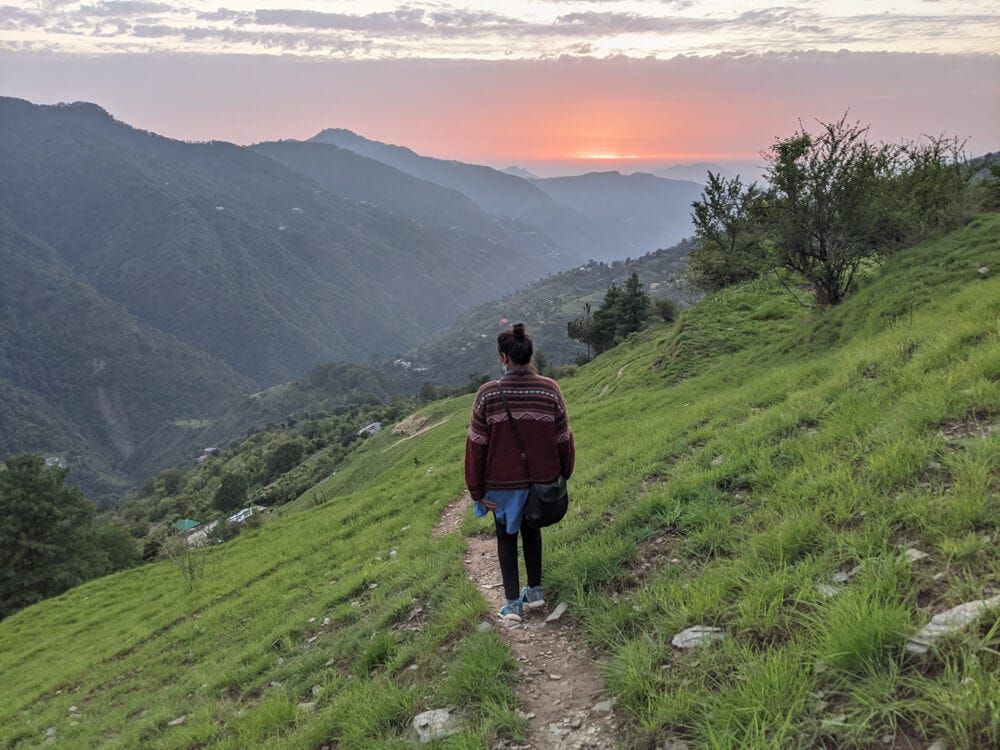
I have arrived in a home in Himachal where I feel at home, but I’m still settling in. Getting it cleaned, scheduling milk deliveries from local farmers who rear cows, having the stove set up on a table along with the gas cylinder with the help of the kind hosts, buying lentils, fruits, and jaggery, adjusting to the strong winds that shake the cedar forests from 2-5 pm, bringing in my carton of books from the car parked downstairs on the highway that can take me up to Leh-Ladakh, and avoiding the temptation to be out all the time.
Along with writing, I have been reading tonnes, chatting with the host family, catching up with their stories from the past two years (we stayed with them in 2021, too) and running around on their private Himalayan knoll on which I sit under the pine and deodar where no one can see me, listening to the cuckoo’s kooh-kooh.
It is beautiful out here, and I am afraid I won’t be able to make the most of it as I had on my previous visit. Two years ago my partner S and I trekked high mountains, climbed apple trees, explored all the trails going around the village, drank local cherry wine, and spent time with the families. But now I have a creative writing project to finish and have to be more mindful of my time else the deadline would knock at my door, and I won’t have the final pages it would ask of me.
So, well, yesterday, I made a schedule I want to stick to (get up at 5/5:15, ten-fifteen minute meditation, work until evening with a lunch break, and so on.) I stuck to it for the most part, until the host family members came to our house, and then I chatted with them. In the evening the hill beckoned me to it. The women of the family were going downhill to cut grass for their cows, and I descended behind them. Squatting beside them, I asked millions of questions about grass and trees. Then I ran up the hill on my own exploration and sat under the trees with my eyes closed, feeling the wild wind at its full force. In front of me was the sun setting behind clouds lining them with silver. By the time I returned home I was so happy I made semolina sweet (halwa we call it locally) and gave some to the family, to S, and ate two bowls full myself. Giggling, I got back to the schedule.
Work would go on and merrymaking would go on, too. I guess I will just have to push through everything and neither worry about being distracted nor about missing out.
Maybe distraction isn’t as bad as we deem it. In an essay on irritation I have shared below, the author Will Rees quotes Nietzsche for whom, “irritation was an ‘extreme susceptibility … so great that merely to be “touched” becomes unendurable, for every sensation is too profound.’ In one aphorism in The Gay Science, Nietzsche writes that those who attempt to practise self-control are afflicted ‘with a peculiar disease; namely, a constant irritability in the face of all natural stirrings and inclinations – as it were, a kind of itching.’”
Am I in my attempt to practise self-control rigged with the constant irritability disease or am I driven by my need to focus given the circumstances?
The essay further said, “Yet in the next aphorism, Nietzsche rejects stoic attempts to overcome this bodily sensitivity, and instead suggests that one ‘selects the situation, the persons, and even the events that suit his extremely irritable, intellectual constitution’. He suggests that embracing one’s irritability is a necessary condition for creativity; it is, he writes, ‘what all those have always done whose work is of the spirit. For this type it would be the loss of losses to be deprived of their subtle irritability and be awarded in its place a hard Stoic hedgehog skin.’”
I interpret this irritability as my constant itch to go out, to see what the mother of the family is doing on the hills, what are the sheep under my window are bleating about, has the milk truck arrived to collect milk pails from the villagers, and so on. You know.
To conclude, Will Rees said, “Far from rehearsing the trope of the thin-skinned artist, the ‘subtle irritability’ of Nietzsche becomes something like a creative practice – one that is productive exactly because it is so distracted.”
Perhaps my need to move, see, and know makes me who I am and produces the kind of writing I do. Seems like Nietzsche is right for today’s collection of things to read is quite diverse, mind-broadening, and in-depth. I learned new concepts this week because I devoted much time to genuine unhurried reading amidst all the external stirrings. I took it all in and it gave much in return.
Did I miss out on writing, or have I become a different, evolved me who is better equipped to write with many relevant ideas under her belt?
I’m happy and enriched, despite the distractions, delays, and dilemmas.
though we always quote Robert Frost's
“Two roads diverged in a wood, and I—
I took the one less traveled by,
And that has made all the difference.”
but in the same poem he writes, and these lines resonate with me all the more,
“Oh, I kept the first for another day!
Yet knowing how way leads on to way,
I doubted if I should ever come back.”
One way leads to another, that is the rule of nature and these Himalayan hills, too.
Do you get diverted often? What do you do then?
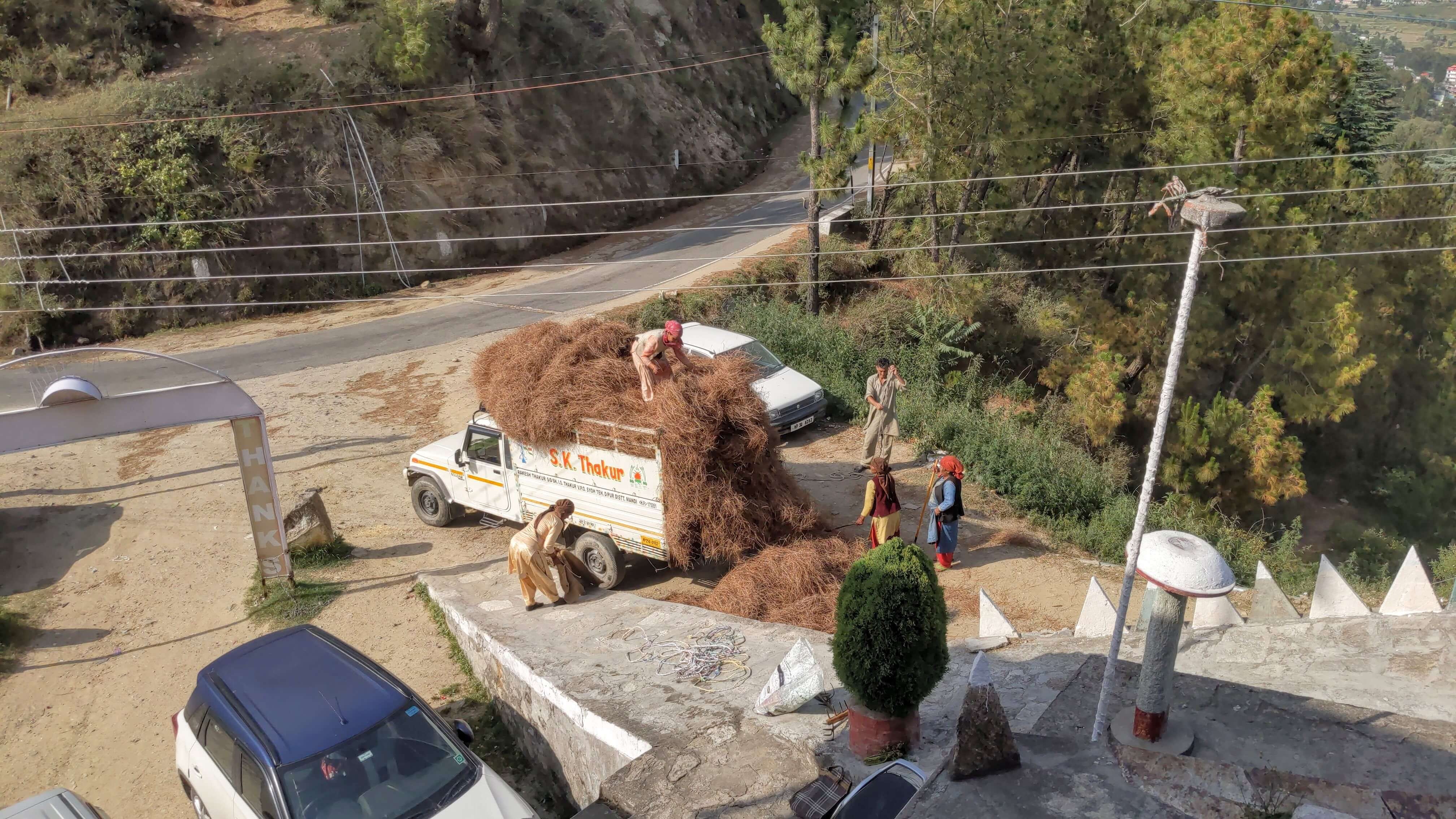
Distracted and watching the host (on the top of the truck) and her helpers unload the dry pine needles they collected from the forest that afternoon. But now I know these would form good bedding under her cows in monsoon and winter.
For this week’s letter,
Some of my writing,
quotes I love,
things to read,
things to watch,
and
travel tips.
Articles From the Week
Lucknow Food Trail: Childhood Memories and a Miss and Hit of Expectations [Episode 4]
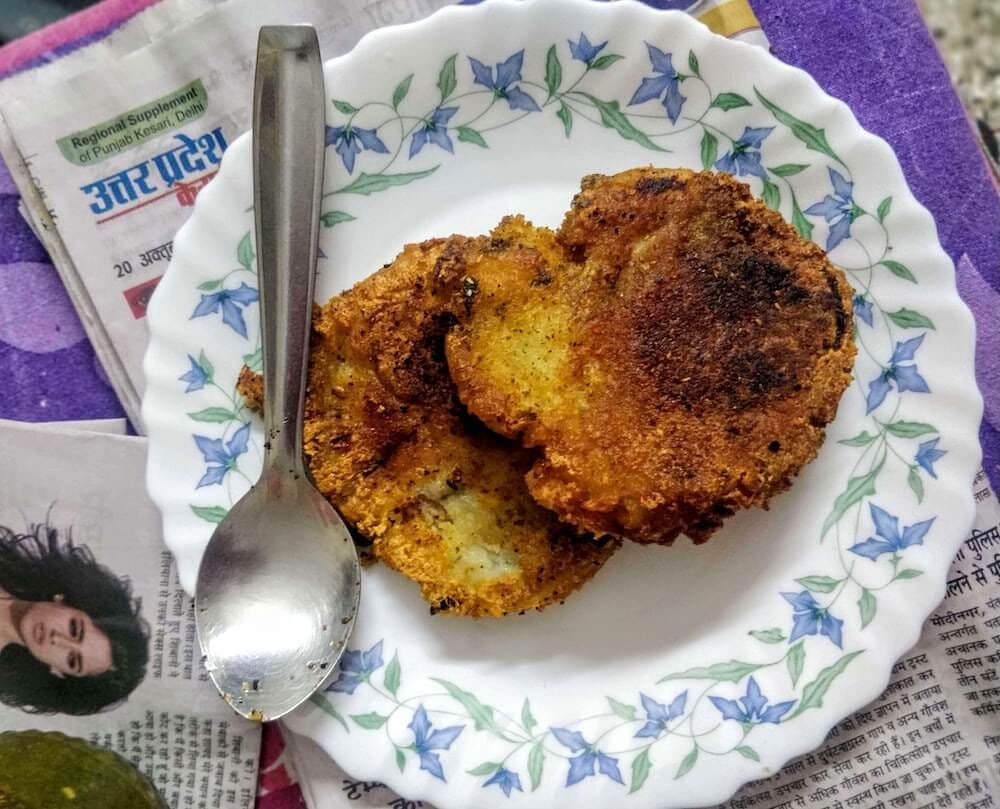
We were going to pass Lucknow on our way to Himachal (from Sikkim). So for that afternoon, we had planned a Lucknow food trail: not any guide, but we ourselves were taking us on an impromptu food tour through Lucknow. I had never been to Lucknow before and neither did my partner S and skipping the city’s popular delicacies to make it quickly to Himachal sounded like a lame excuse.
This is Episode 4 in the series of travel essays on my Sikkim to Himachal highway journey (I have shared the first three in previous newsletters).
The rest of the stories to follow this week.
Read the travelogue now. Or Pocket it for later.
Ditch Passion, Follow Curiosity – Build a Career You Love
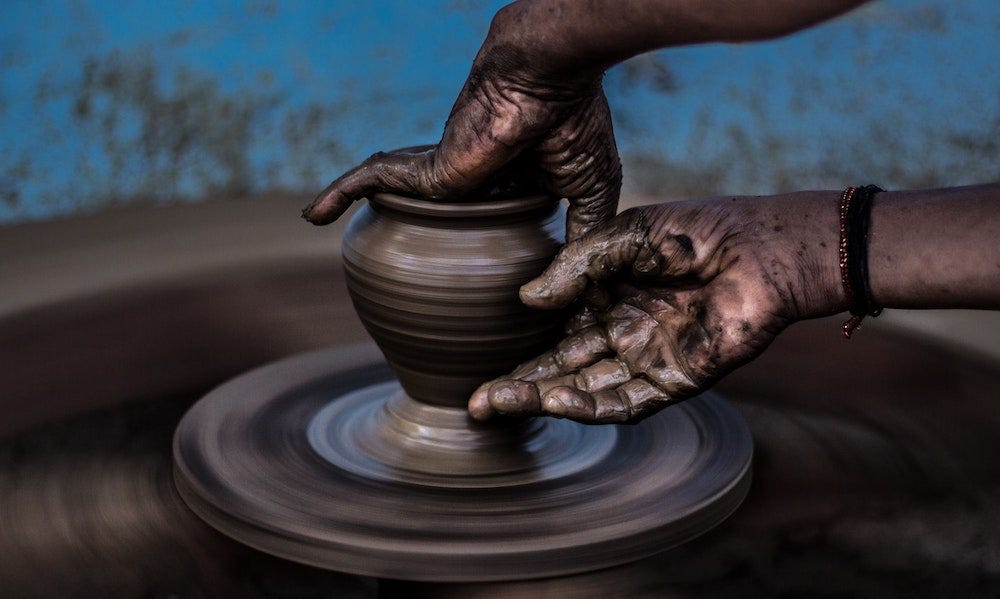
Finding your passion isn't the best advice always. When it isn't practical to pursue passion or it is absent, even overrated, follow your curiosity to build a career you love.
Read my ideas on following curiosity to build your best career now. Or Pocket it for later.
Quotes I Love
“Remember, remember, this is now, and now, and now. Live it, feel it, cling to it. I want to become acutely aware of all I’ve taken for granted.“
Sylvia Plath
“The journey begins when you close your door behind and you start walking.”
Miguel “Freekhand” Herranz, taken from An Illustrated Journey by Danny Gregory
“I am hopelessly in love with a memory. An echo from another time, another place.”
Michael Faudet
Why Did It by William J. Harris
Why did it
take all
day
to get nothing
accomplished
Why, I could
have started
at noon
& saved a lot
of time
“Our easy days are only easy because they were once hard enough.”
Yours Truly
What I’ve Been Reading
I’ve been reading short stories, books, articles, and so much more. I can’t possibly list all what I have read in the past week so I’m putting down the things I found most relevant and worthwhile.
Beautiful reads from the week,
On Loneliness (While writing about it I read a lot):
The History of Loneliness by Jill Lepore — This essay by New Yorker is a must read on loneliness.
“Separated from the group—either finding yourself alone or finding yourself among a group of people who do not know and understand you—triggers a fight-or-flight response.”
How Loneliness Reshapes Brain by Marta Zaraska — Another essential read on loneliness and how prolonged isolation can change our brain.
“Lonely individuals tend to end up with a more negative spin on whatever information they receive — facial expressions, texting, whatever — and that drives them even deeper into this loneliness pit.”
Those who want to dig deeper into loneliness, this study is for you: Acute social isolation evokes midbrain craving responses similar to hunger — We crave company like we crave food (just after ten hours of isolation or fasting).
About Happiness,
How to Live Unhappily Ever After by Augusten Burroughs — “I just want to be happy”: implications and solutions.
"And by whole, I mean damaged, missing pieces of who you were, your heart—missing what feels like some of your most important parts.And yet, not missing any part of you at all. Being, in truth, larger than you were before."
How to be Perfectly Unhappy by the Oatmeal — Now would you call this a comic, an essay, a lesson, or world's biggest secret, and most obvious truth, disclosed in a flow of charming scenes?
On History, Memory, and Myths,
Thirteen by Claire Sicherman — A memoir that made me wonder if we torture ourselves by revisiting past memories and reliving past horrors, or is it a way of moving forward and healing?
“I have read an article in The Guardian about the importance of doing this for kids, how children who have a strong family narrative are healthier emotionally. Is this still true if the family narrative includes genocide? I wonder.”
Memories Within Myth by Patrick Nunn — A beautiful piece that establishes the stories of oral societies as less like myth and more like real stories, rationalised, mythicised, and embellished so they are retold with interest and verve.
“These ‘myths’ are not fiction. Most of the ancient myths of long-established cultures have an empirical core. They are not inventions but observations, filtered through worldviews from potentially thousands of years ago and clothed with layers of narrative embellishment before they reach us today. Framed within the science of their day, they represent knowledge often from times far earlier than those in the world’s oldest books.”
Disorient Yourself by Javier Moscoso — A history of swings, and, for me, a ride down (or up) memory lane because as a young girl, I flew high on the swing put by my parents on their big neem tree. The swing was only put up during the monsoon, and I sat on the wooden slab, clutched the jute rope, and swung so high I could see our thick garden from above. To date I remember the light giggly feeling in my stomach as I rose up and up and how much it enthralled me that I could fly so high. This essay talks about how swings can intermittently make one feel liberated, independent, and above the rest; I, for sure, was above the rest of the world in those thrilling moments and what I would not give to have that neem tree back and the jute swing on it as it was once.
“Swing: It is also an object, and experience, with which we are so familiar that we do not consider it worthy of serious thought. And, finally, it has suffered the fate of many other objects neglected by adults: it has ended up in the hands of children.”
The Neanderthal Renaissance — New archaeological finds and studies show that present humans have as stunning as twenty percent of Neanderthal DNA and shred the ‘replacement without interbreeding’ story of the Neanderthals’ decline.
“Who were the Neanderthals? Even for archaeologists working at the trowel’s edge of contemporary science, it can be hard to see Neanderthals as anything more than intriguing abstractions, mixed up with the likes of mammoths, woolly rhinos and sabre-toothed cats. But they were certainly here: squinting against sunrises, sucking lungfuls of air, leaving footprints behind in the mud, sand and snow. Crouching to dig in a cave or rock-shelter, I’ve often wondered what it would be like to watch history rewind, and see the empty spaces leap with shifting, living shadows: to collapse time, reach out, and allow my skin to graze the warmth of a Neanderthal body, squatting right there beside me.”
Related to day-to-day emotions and stirrings,
In Praise of Irritation by Will Rees — This essay on irritation is marvellous in its totality and so essential, to be read over and over.
“Even when it’s directed at others, irritation is generally an antisocial feeling, a conversation with oneself. This is probably because irritation’s gripes tend to be so superficial as to be virtually incommunicable: one is irritated by how a person speaks, their tone or timbre, rather than by what is actually said. While anger burns and sadness wounds, irritation’s lesions are skin deep. How could anyone be expected to take them seriously?”
Don’t let them fool you by Tess Wilkinson-Ryan — A brilliant essay on how we are all haunted by the fear of being duped, how deep it penetrates even the most mundane decisions of our lives, what are the consequences, and how others (especially politicians) harness this fear to continue repressing the weaker ones.
“When people perceive the threat of exploitation, it seems to shift their attention from the risk of material loss to what the situation means for the self – if I let you take advantage, what does that make me?”
"Studying – and even just naming – the fear of being a sucker allows us to challenge the use of a construct that does its most pernicious work when no one is looking."
On survival, despite everything,
From months on a remote island to bear-infested mountains: four ‘miracle’ child survival stories — Just amazing.
Please note: I have been reading about ten books simultaneously, but I will share those in the coming week.
What I’ve Been Watching/Listening
that’s worth mentioning
I saw the Maska movie — Though there could be a lot of improvements in the film, the storyline is solid: a young man wants to follow his dreams but is expected to continue the hundred-year-old family cafe. In the movie, our innermost fears, desires, confusions, and complexes all are laid open to be seen, understood, and dealt with. Slowly we evolve through our ideas, and all we need is some time to figure things out: the movie shows this beautifully. It was a simple watch, and I would recommend it to everyone.
And for all my Wanderlusters
Sharing some more photographs from the Gangtok city. We left Gangtok on 5th May, but our time in the city feels like another era now.
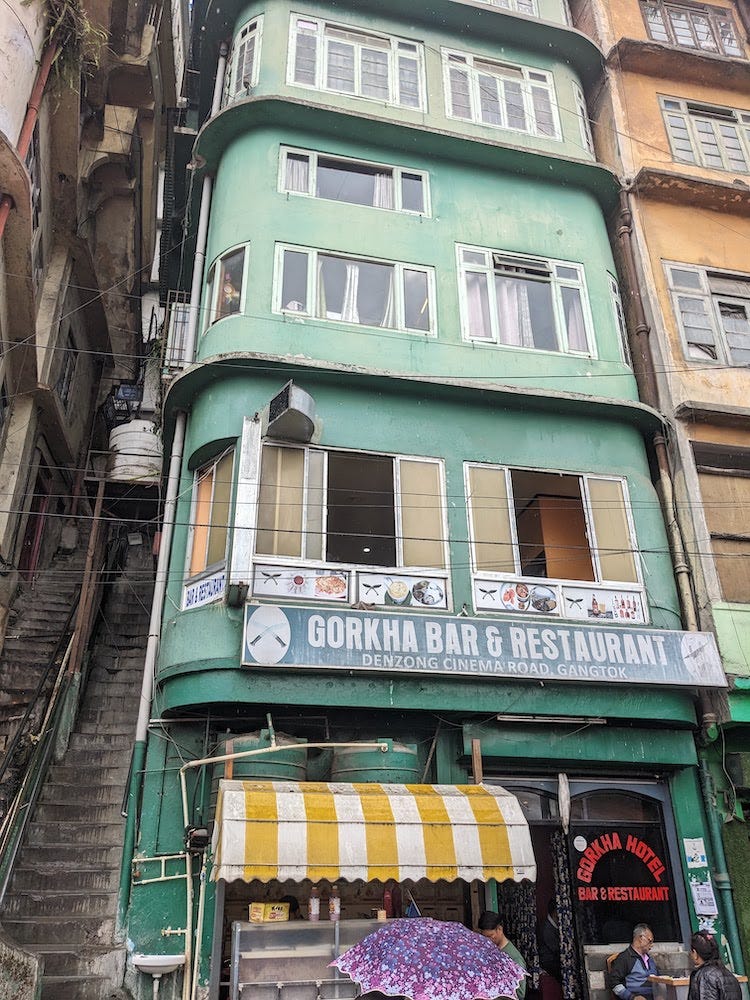
a Nepali restaurant where we ate many meals. See the steep staircase? Getting down the stairs wasn’t the easiest.
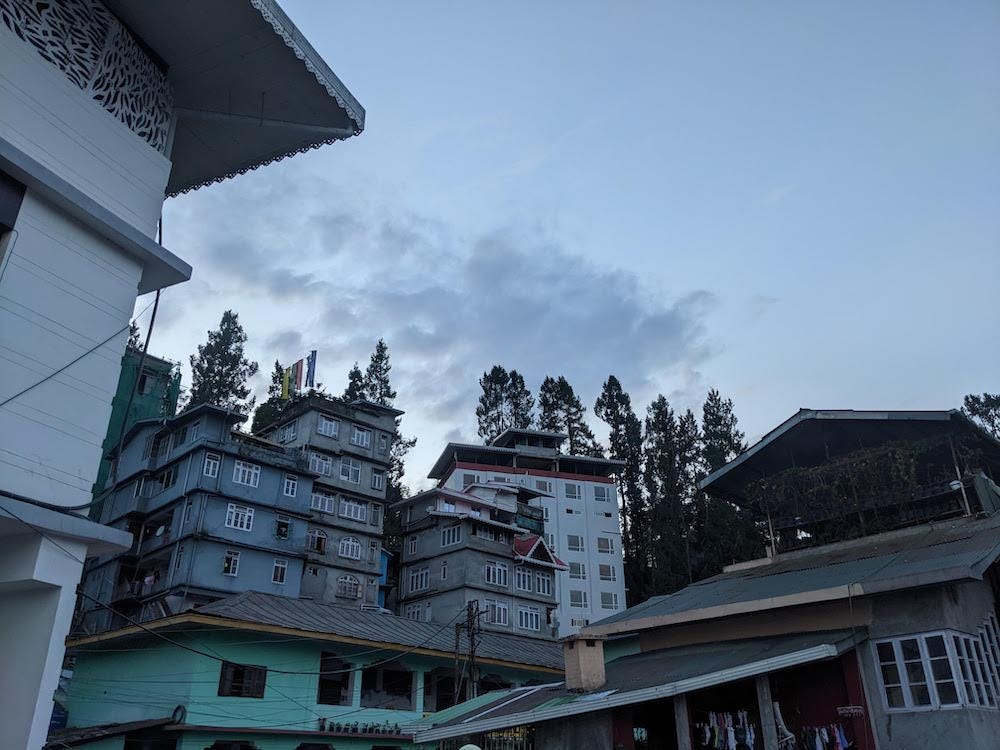
lego homes of Gangtok
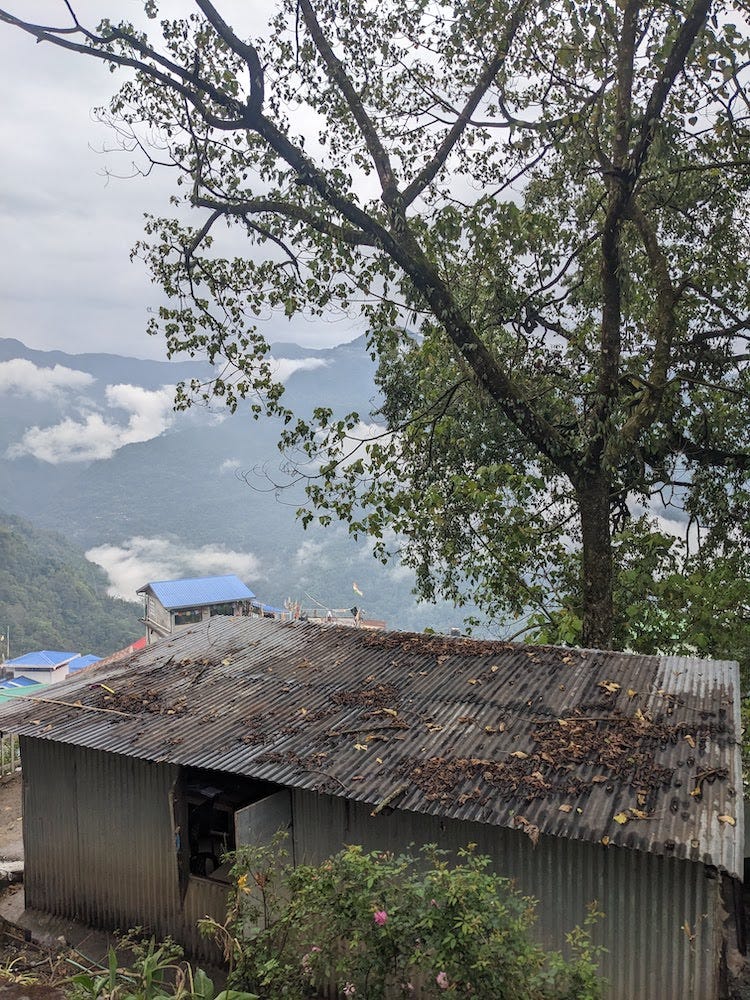
can you believe this is a small food joint? Under a tree.
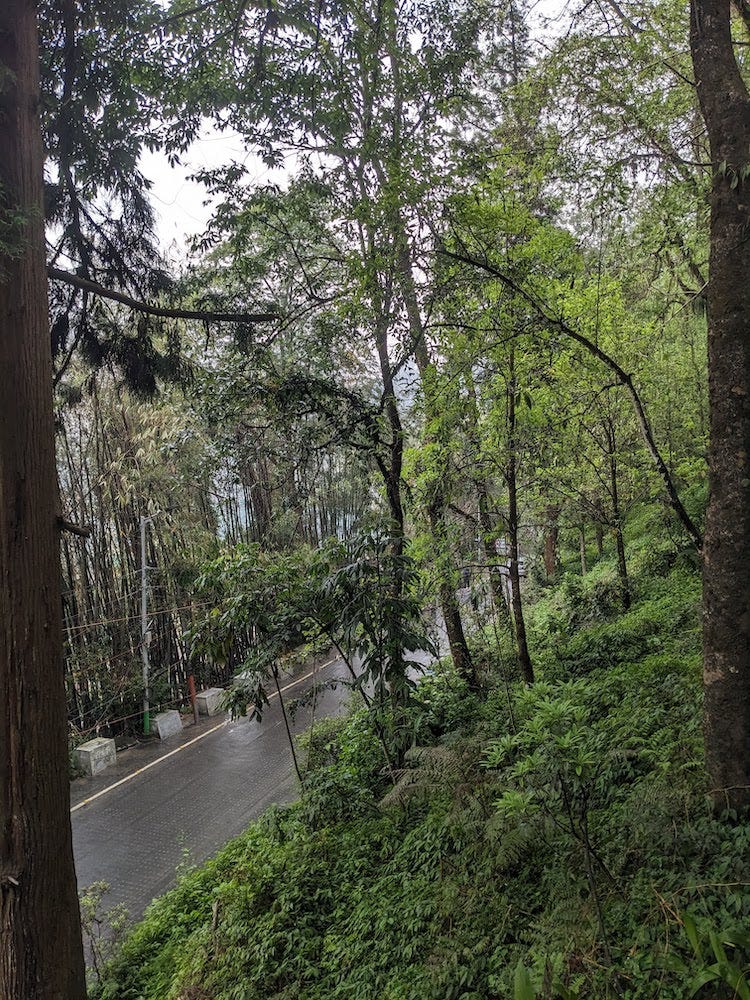
a sylvan frame I witnessed every day while walking between the hotel and the market where my partner S and I ate lunch.
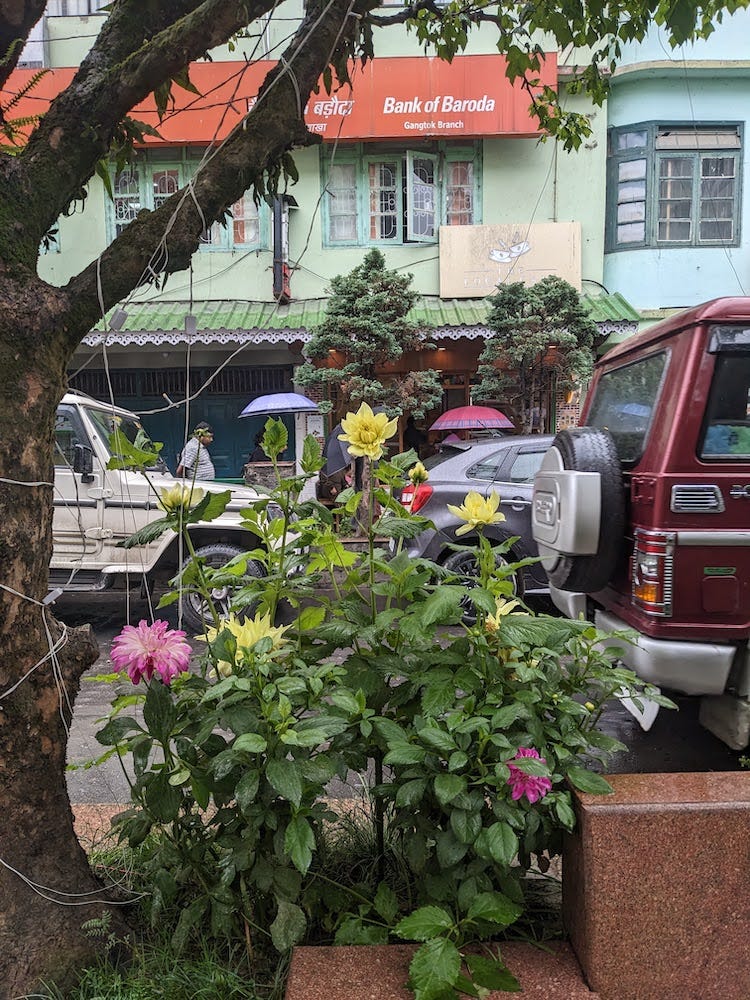
the main square of the city. Freshly washed.
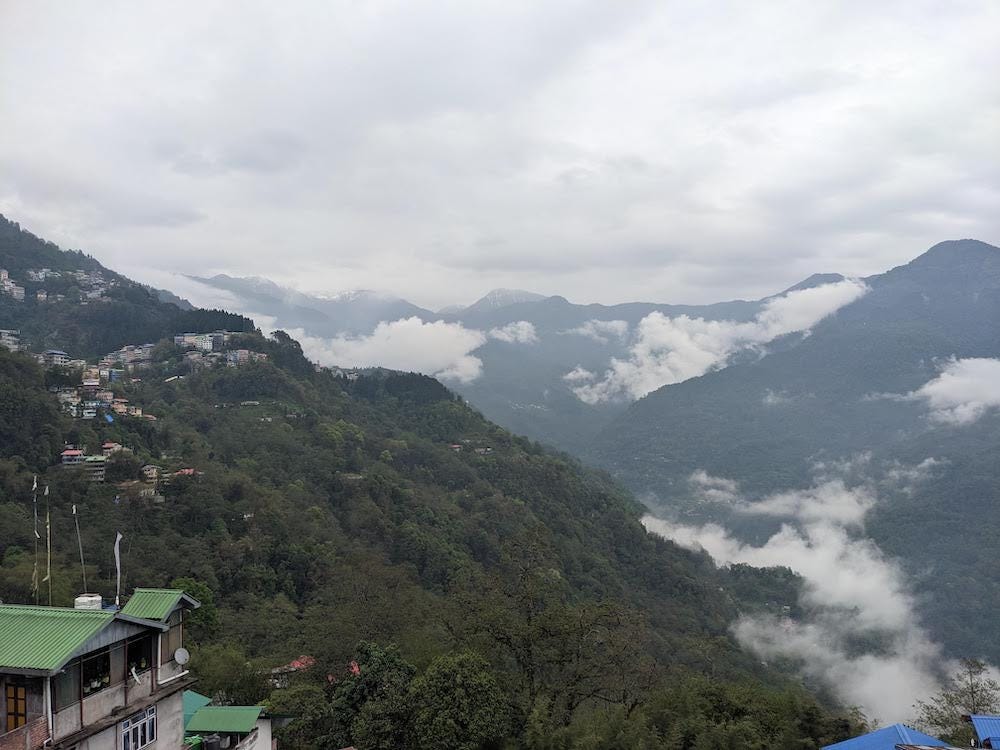
the valley beyond our guesthouse
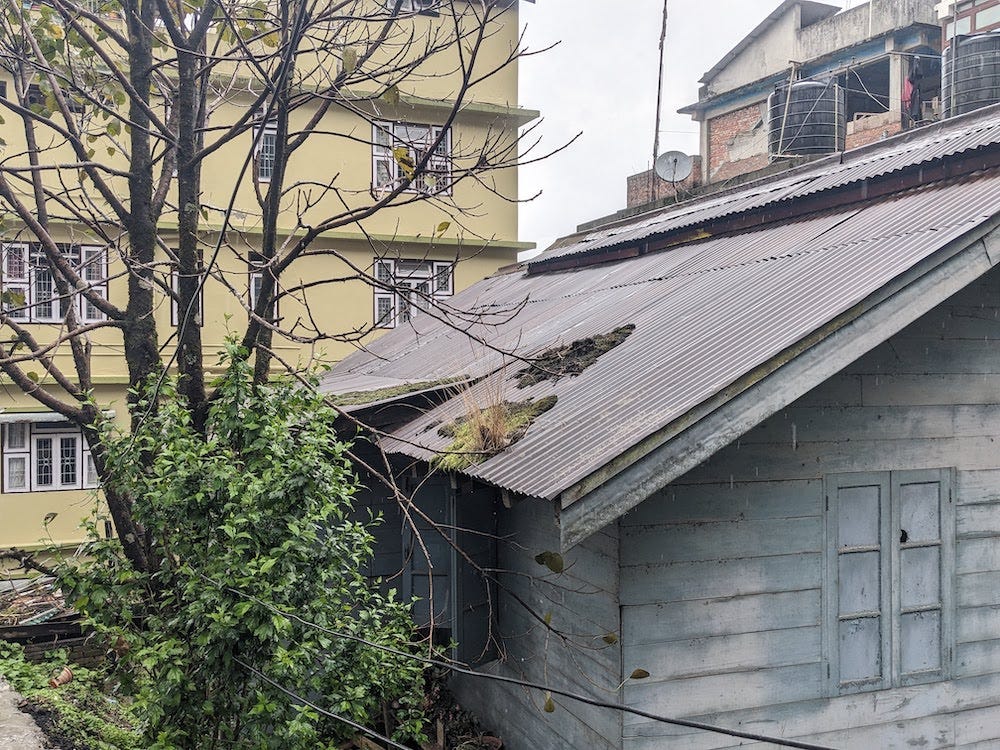
a tiny moss forest on a roof
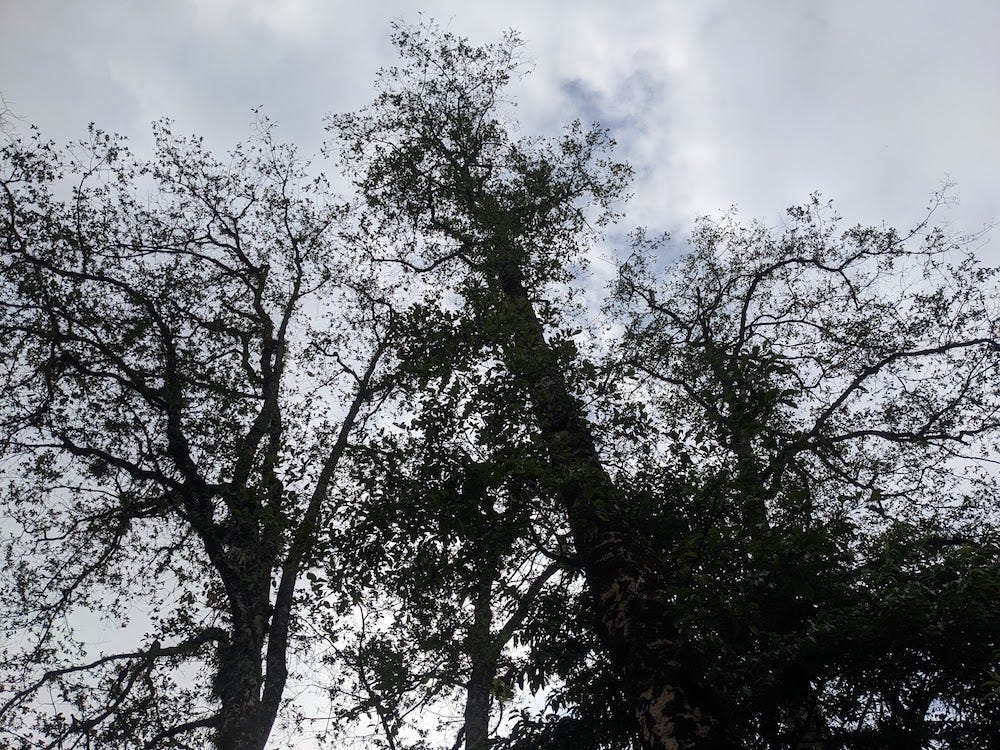
hello, they seem to say.
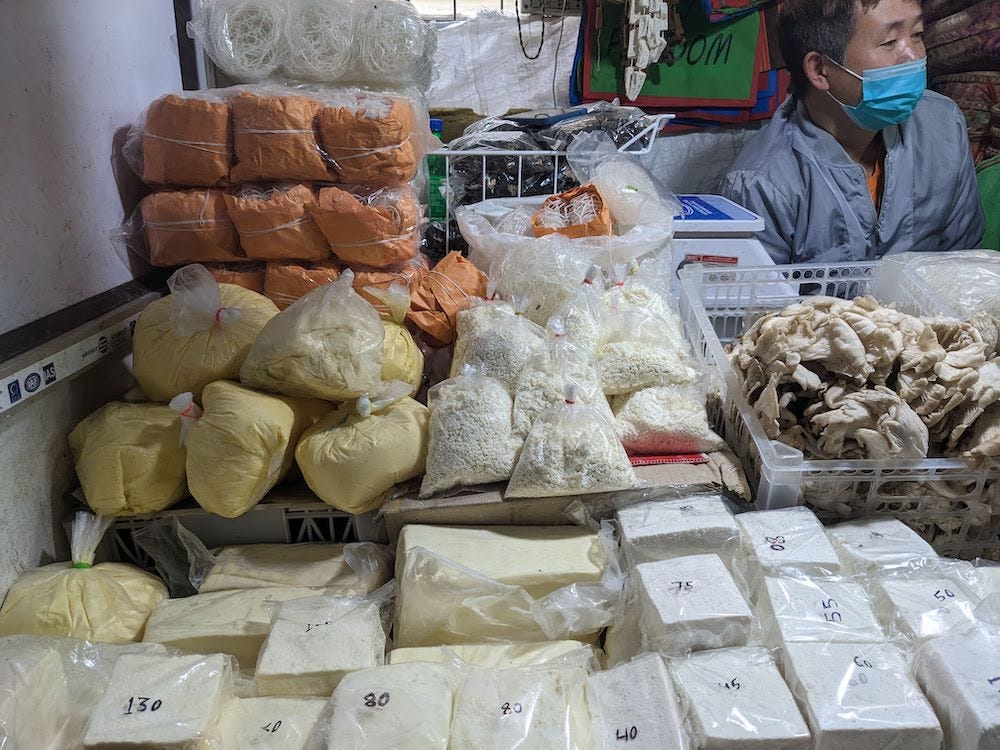
Sikkim had many varieties of butter, cottage cheese, yak cheese, and so on. All of this had come from the pastoral part of the state.
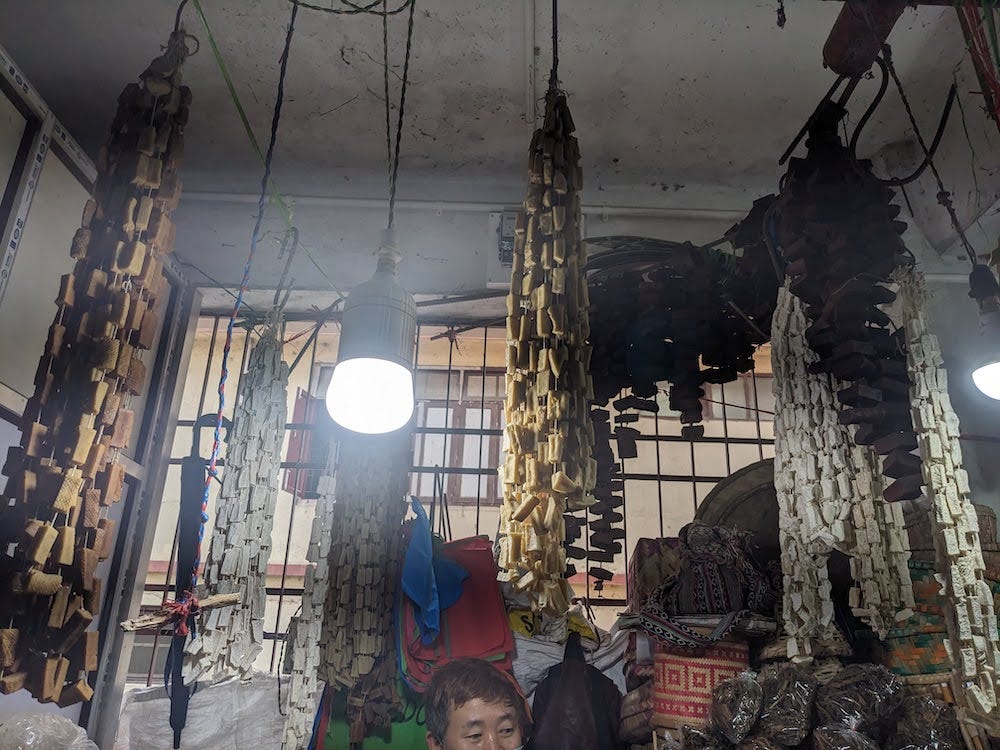
the smoky yak cheese, churpi, drying. This hardened cheese survives for years and was once shepherds’ main source of protein as they herded sheep and cattle on noman’s land. Now churpi is a popular dog treat in Western countries.
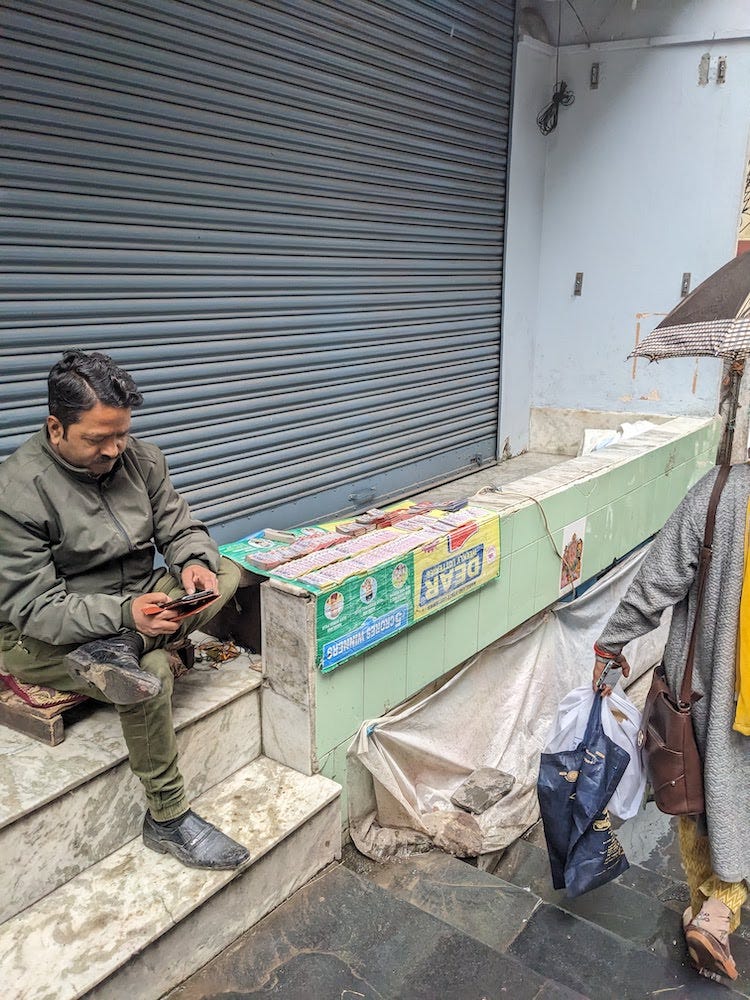
lottery is very much legal in Sikkim
Thank you for reading.
I hope you have a great week ahead. Hope you are rested, excited, and intrigued!
Let me know what you think about this letter. Press reply.
Yours,
Priyanka
Some housekeeping… This email may end up up in the Promotions tab of your inbox. If you don’t find the newsletter during the week, go to your Promotion tab and move this email to your Primary inbox. Looking Inwards letter will be in your inbox every week from then on.
Loves your content, it never fails bring smile to my face. Thank you!